Why 90% of MSMEs Never Win a Single Government Tender
India's government procurement market is worth ₹50–70 lakh crore annually — nearly 20–22% of GDP. Yet most small and medium businesses never see a rupee of it.
The reason isn't eligibility. It isn't pricing. It isn't even paperwork.
It's a lack of system.
Government tendering in India — across PWD, CPWD, GeM, Railways, MES, PSUs, and hundreds of state departments — is not random. It is a structured, learnable process. And once you understand it, winning becomes repeatable.
That's the foundation of the GWME Framework, developed by Dr. Siya Seth with 26+ years of hands-on experience in India's government ecosystem.
What Is the GWME Framework?
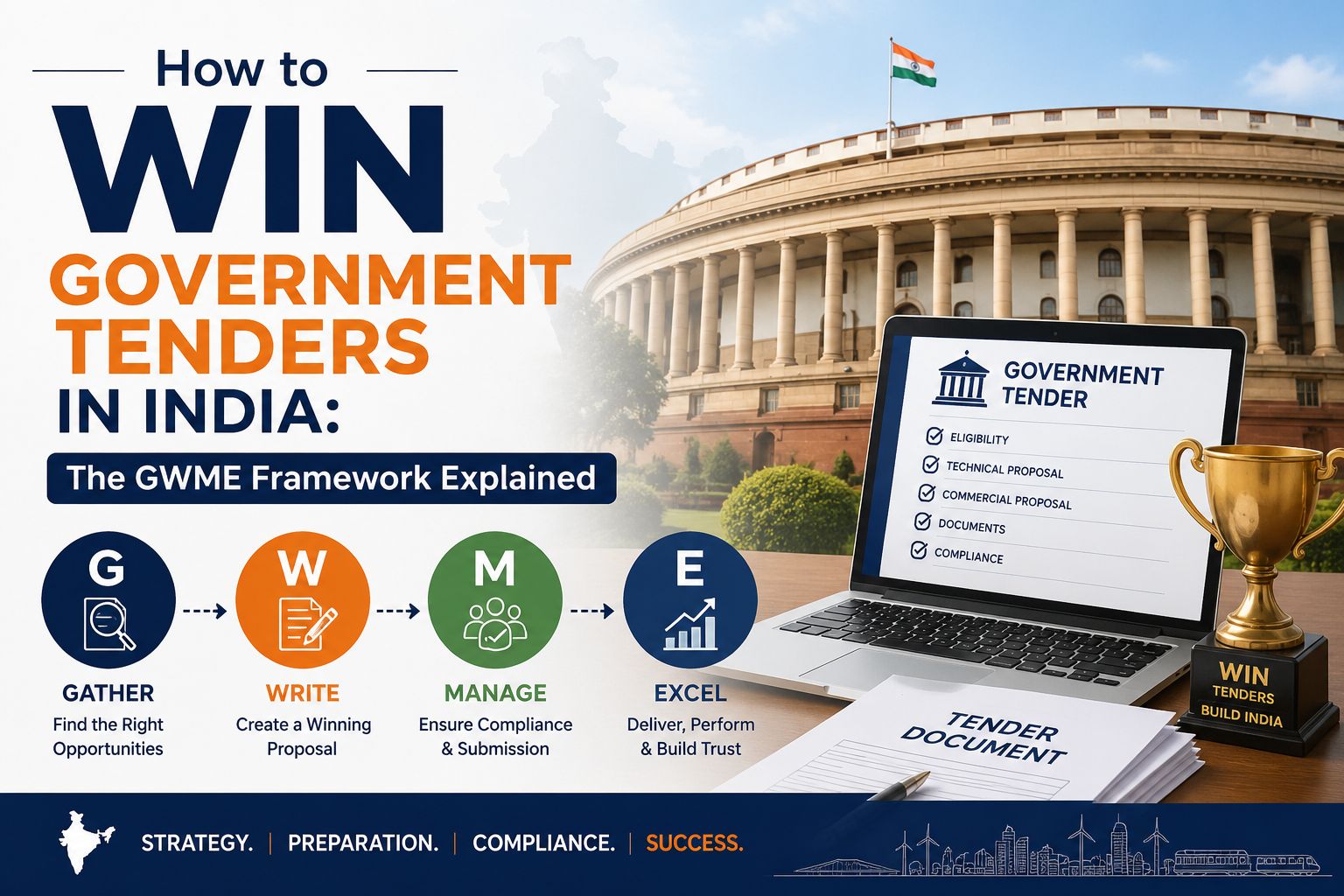
GWME stands for four execution pillars that every successful government contractor must build:
- G — Groundwork Intelligence: Registrations, compliance, and tender-readiness
- W — Winning Architecture: How to identify and frame profitable tenders
- M — Mechanized Systems: SOPs, dashboards, and team roles
- E — Execution Engine: Drafting proposals and scaling multi-state operations
Each layer builds on the previous. Most businesses who fail at tendering are missing one or more of these layers — often the first.
G: Groundwork Intelligence — Get Compliant Before You Compete
Before applying to a single tender, your business must be tender-ready. That means:
- Udyam Registration (MSME Certificate) — mandatory for EMD exemptions and MSME-only tenders
- GST Registration and filing compliance
- PAN, DSC (Digital Signature Certificate), and GeM Seller Account
- Company incorporation (Pvt Ltd or LLP preferred for serious tendering)
- Bank account with clear turnover history
Missing even one of these can result in outright disqualification. The good news: most of these can be set up within 2–4 weeks. Udyam Registration itself is free at udyamregistration.gov.in.
Pro Tip from Dr. Siya Seth: 'Many businesses rush to bid before they're compliant. Your profile is your first impression. Government buyers evaluate vendor profiles before they ever open your bid.'
W: Winning Architecture — Find the Right Tenders, Not Just Any Tenders
The biggest mistake first-time government vendors make is bidding on everything. This burns time, money on EMDs, and credibility.
Winning Architecture means:
- Identifying your 3–5 core categories and sticking to them
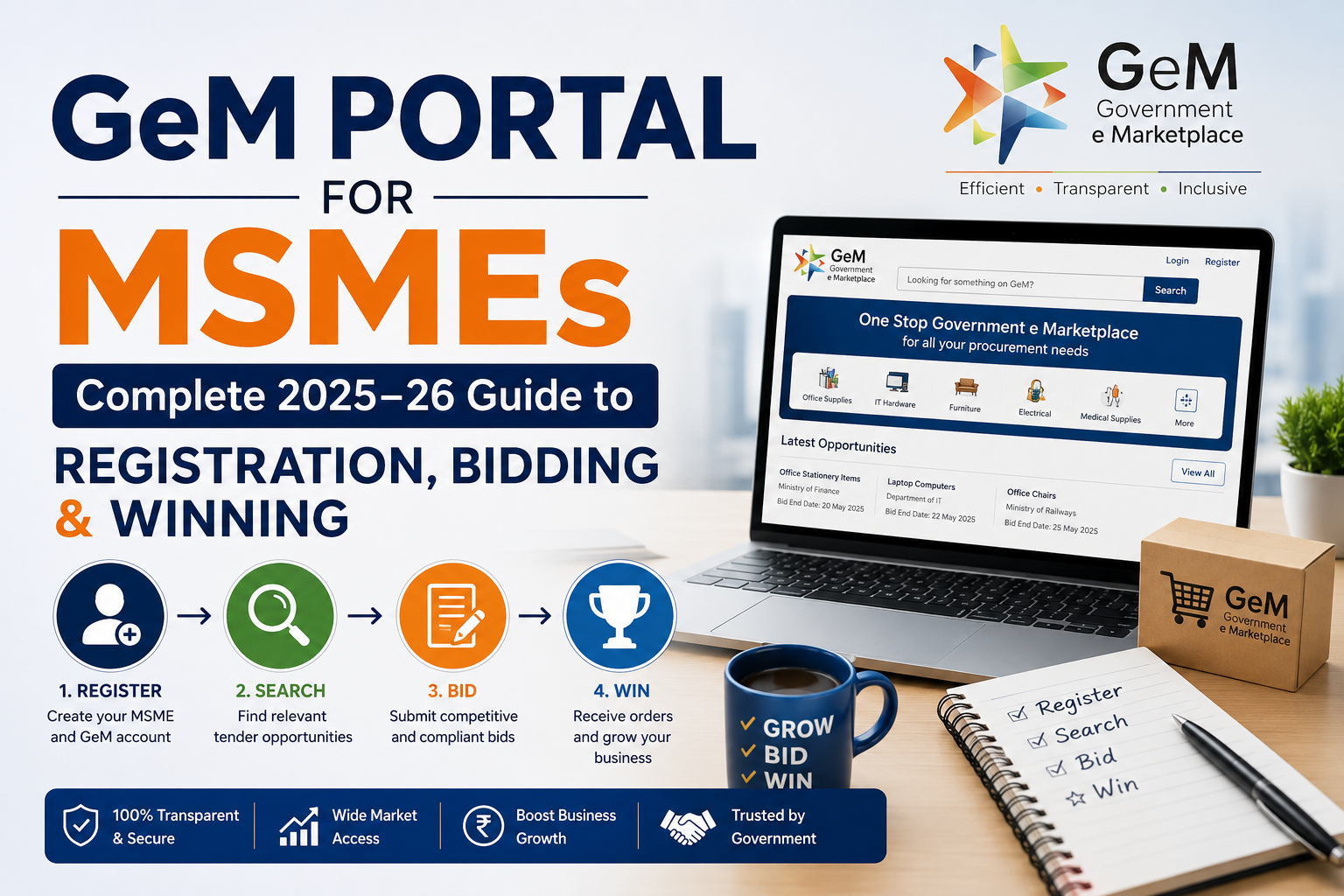
- Using GeM portal filters for category, location, turnover, and closing date
- Reading the NIT (Notice Inviting Tender) with precision — especially eligibility, scope, and evaluation criteria
- Targeting tenders where you can qualify as L1 (lowest compliant bidder) without operating at a loss
Data supports this disciplined approach: vendors who focus on 3–5 closely related categories achieve significantly higher win rates than those who spread across many categories.
GWME Insight: GeM's GMV crossed ₹4 lakh crore in FY 2024–25 — a 50% year-on-year growth. The opportunity is massive. The key is targeting, not scattering.
M: Mechanized Systems — Build Infrastructure That Scales
Most tendering businesses fail to scale past ₹1–2 Cr because everything depends on the founder. The 'M' in GWME changes that.
This phase involves building:
- Standard Operating Procedures (SOPs) for each tender type
- Tender calendars with submission deadlines and evaluation timelines
- Document vaults — pre-organized with ISO certificates, turnover statements, experience letters
- A small, trained team with clear roles: tender tracker, documentation lead, finance POC
With a mechanized system, your business can pursue 10–15 tenders simultaneously without chaos.
E: Execution Engine — Win Contracts and Deliver Flawlessly
Winning a tender is only half the battle. Government departments track vendor performance. A poor execution record can blacklist your firm and disqualify you from future tenders.
The Execution Engine covers:
- Technical bid writing — clear scope acknowledgement, methodology, and timelines
- Financial bid strategy — pricing competitively as L1 without underquoting
- Mobilization planning — resources, materials, and sub-vendor coordination
- Milestone documentation — keeping records for payment claims
- Variation and escalation handling — knowing your contractual rights
Dr. Siya Seth's book Smooth Sailing Through Government Projects covers this phase in granular detail — from project kickoff to final payment release.
Who Is This Framework For?
The GWME Framework is designed for:
- MSMEs and startups looking to enter the government procurement space
- Consultants and service providers who want predictable B2G revenue
- Entrepreneurs currently at ₹50L–₹5 Cr turnover who want to scale 5–10x through government contracts
- Existing contractors who keep losing tenders and don't know why
How GWME India Trains You
GWMEindia.com offers structured programs built around this framework:
- GovTender Tutorials & Tools System — end-to-end blueprint for tender success
- AI-Powered Government Tender Mastery Bootcamp — leveraging technology for bid intelligence
- Smart Business Growth Blueprint — scaling from ₹0 to ₹10 Cr in government revenue
- 1:1 strategy sessions and community access for serious founders
Each program is built from Dr. Siya Seth's direct experience working with PWD, CPWD, PSUs, Railways, MES, and nearly every major ministry.
Conclusion: The Government Market Rewards Systems, Not Luck
India's government procurement opportunity is not going anywhere. Union Budget 2025 increased capital expenditure to ₹11.11 lakh crore — more infrastructure, more contracts, more opportunities.
But only businesses that approach government tendering as a system — not a gamble — will capture this growth.
If you're ready to build that system, the GWME Framework is your starting point.
Ready to win your first — or next — government tender? Explore Dr. Siya Seth's programs at GWMEindia.com